
What Causes a Vibrating Steering Wheel? Common Issues Explained
Your steering wheel should feel smooth and controlled whenever you're behind the wheel. So when it starts shaking or vibrating, particularly at certain speeds, during braking, or over uneven roads, it's worth paying attention.

A vibrating steering wheel doesn't
automatically mean there's a steering system problem. Tire balance, wheel
alignment, tire wear, brakes, suspension components, and even a damaged wheel
can all contribute to vibration.
If you've noticed your Ford steering
wheel shaking while driving around Nokomis, Venice, or Sarasota, understanding when
the vibration occurs can provide useful clues about what may be causing it.
Why Is My Ford Steering Wheel Vibrating?
Steering wheel vibration can come from
several different areas of your vehicle. In some cases, the cause may be
relatively simple, such as an out-of-balance wheel. In other situations, the
vibration may be related to brakes, suspension, steering, or other components
that need inspection.
Start by noticing when you feel the
vibration. Does it happen at a particular speed? Does it appear when you brake,
accelerate, or drive over bumps? Or is it present most of the time?
These details can help a technician
narrow down the possible source.
|
When You Notice the
Vibration
|
Possible Cause
|
|
At certain speeds
|
Tire or wheel imbalance, tire condition
|
|
Primarily while braking
|
Brake components or rotor issues
|
|
Over bumps or rough roads
|
Suspension or steering components
|
|
During acceleration
|
Drivetrain or axle-related issues
|
|
At most speeds
|
Tire, wheel, alignment, suspension, or steering concerns
|
|
Along with uneven tire wear
|
Wheel alignment or suspension problems
|
1. Your Tires May Be Out of Balance
An imbalance between a tire and its wheel
can create noticeable vibration, particularly as your Ford reaches certain
speeds.
A wheel and tire assembly needs to rotate
evenly. If the balance is off, you may feel the resulting vibration through the
steering wheel. In some cases, the vibration may also be noticeable through the
floor or seat.
Balance can be affected by normal tire
wear, a missing wheel weight, recently installed tires, or an impact with a
pothole or curb.
If your Ford steering wheel starts
shaking primarily at certain speeds, having the tires and wheels checked for
proper balance can help determine whether they're contributing to the problem.
2. Your Wheel Alignment May Be Off
Your Ford's wheels are positioned at
specific angles to help maintain proper handling, tire contact, and steering
response. An impact with a pothole, curb, or other road hazard can potentially
affect those angles.
An alignment problem may show up in
several ways. Your vehicle might pull toward one side, the steering wheel may
sit off-center, or your tires may develop uneven tread wear.
Over time, driving with improper
alignment can contribute to accelerated tire wear and affect the way your Ford
handles.
If you've recently hit a pothole or curb
and then noticed vibration, pulling, or unusual tire wear, an alignment
inspection may help identify the problem.
3. A Tire Could Be Damaged or Wearing Unevenly
Your tires are constantly exposed to road
surfaces, heat, braking forces, and steering loads. As a result, several
conditions can contribute to uneven tread wear.
Incorrect tire pressure, alignment
problems, worn suspension components, improper rotation, and normal tire wear
can all affect how evenly the tread wears.
A damaged tire can also produce
vibration.
Check for visible warning signs such as
uneven tread, cracks, bulges, or other damage. However, remember that some tire
problems aren't immediately obvious from a visual inspection.
If your steering wheel shakes while
driving and the vibration seems to be getting worse, have the tires and wheels
inspected rather than continuing to drive without determining the cause.
4. Brake Problems Can Cause Vibration
If the steering wheel mainly vibrates
when you apply the brakes, the braking system may be the area that needs
attention.
Your Ford's braking components deal with
substantial heat and friction during normal driving. Problems involving brake
rotors, pads, calipers, or related components can sometimes cause vibration
that you feel through the steering wheel during braking.
Pay attention to when the vibration
occurs. A steering wheel that shakes only while slowing down can point toward a
different issue than one that vibrates continuously while cruising.
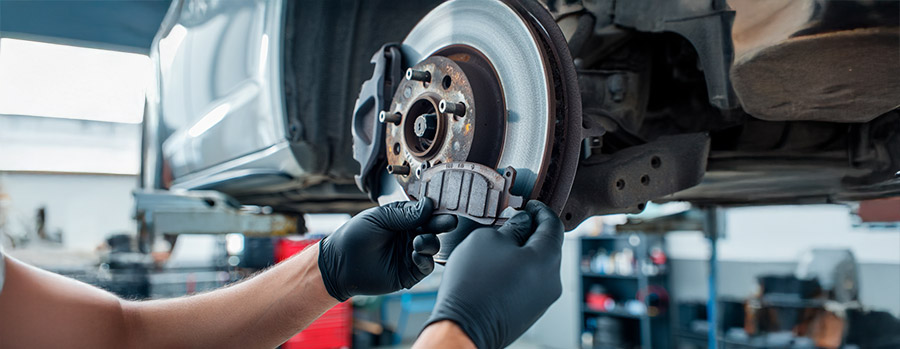
If braking causes steering wheel shake,
brake pedal pulsation, unusual noises, or changes in braking performance, have
the system inspected.
5. Worn Suspension Components May Be the Cause
Your Ford's suspension system helps
maintain tire contact with the road while supporting stability, handling, and
ride comfort.
Components such as control arms,
bushings, ball joints, shocks, and struts can wear over time. When these
components aren't functioning properly, you may experience vibration, unusual
noises, uneven tire wear, or changes in how the vehicle handles.
Suspension-related problems can become
especially noticeable when driving over rough pavement, potholes, or bumps.
Because multiple suspension components
can produce similar symptoms, an inspection is important for determining what
may actually be causing the vibration.
6. Steering Components Can Wear Over Time
A vibrating steering wheel doesn't
necessarily mean the steering system is at fault. However, worn or damaged
steering components can affect steering feel and vehicle response.
Depending on the Ford model, components
such as tie rods, steering linkage, and other related parts may develop wear
over time.
Watch for additional symptoms, including
excessive steering play, unusual clicking or knocking noises, difficulty
keeping your vehicle traveling straight, or changes in steering response.
If the vibration is accompanied by
noticeable steering changes, have the steering and suspension systems
inspected.
7. A Wheel Could Be Bent
Road hazards can sometimes cause more
damage than you can see from the driver's seat. A strong impact with a pothole
or curb can potentially bend or damage a wheel.
A damaged wheel may prevent the tire from
rotating properly and can create vibration that becomes more noticeable at
certain speeds. Depending on the extent of the damage, the problem may not be
obvious while the vehicle is parked.
If your Ford started vibrating after
hitting a pothole or curb, tell your service team about the impact. This can
help direct the inspection toward the tire and wheel assembly.
When Should You Have a Vibrating Steering Wheel Checked?
It's tempting to ignore a minor vibration
if your Ford still seems to drive normally. However, persistent vibration can
be a sign of a problem that may become more noticeable or contribute to
additional wear.
It's particularly important to have your
vehicle checked if the vibration occurs with:
·
Uneven or rapidly wearing
tires
·
Pulling to one side
·
Excessive steering wheel
movement or looseness
·
Clicking, clunking,
grinding, or other unusual noises
·
Vibration that becomes
stronger at higher speeds
·
Vibration during braking
·
Changes in handling or
braking performance
·
A recent pothole or curb
impact
If the vibration suddenly becomes severe
or is accompanied by a major change in steering or braking, avoid unnecessary
driving until the vehicle can be inspected.
How Can You Prevent Ford Vibration Problems?
Regular maintenance can help reduce the
likelihood of some vibration-related problems and can help identify developing
issues before they become more serious.
Keep your tires inflated according to
your Ford's recommended specifications, follow the appropriate tire rotation
schedule, and address alignment concerns when necessary. It's also important to
pay attention to unusual tire wear and changes in the way your vehicle feels
while driving.
Your owner's manual provides
model-specific recommendations for tire pressures, maintenance intervals, and
other service requirements.
Most importantly, don't ignore a new
vibration just because your Ford is still drivable. Changes in steering feel,
handling, braking, or tire wear can all provide useful clues that your vehicle
needs attention.
Get Your Vibration Checked at Matthews-Currie Ford
A vibrating steering wheel can have
several possible causes. Tire balance, wheel alignment, tire condition, brakes,
suspension, steering components, and wheel damage can all contribute to the
problem.
Finding the actual cause requires a
proper inspection rather than simply replacing a part and hoping the vibration
disappears.
If your Ford steering wheel shakes while
driving around Nokomis, Venice, Sarasota, or the surrounding area,
Matthews-Currie Ford can help identify what may be causing the vibration and
determine what service your vehicle may need.
Don't simply get used to a steering wheel that doesn't feel right. Schedule service at Matthews-Currie Ford and let our team take a closer look at your Ford.